+86 574 8117 8830
A fiberglass sleeve is a flexible tubular insulating material made from woven or braided glass fiber yarn. It is widely used to protect electrical wires, cables, motor leads, and other components from high temperatures, electrical leakage, abrasion, and mechanical damage.
Fiberglass sleeves are typically manufactured using E-glass fiber yarn because of its excellent electrical insulation properties, heat resistance, mechanical strength, and dimensional stability.
Depending on the application, the fiberglass braid can be used without a coating or treated with different insulating materials, such as PVC, acrylic resin, silicone rubber, polyurethane, or insulating varnish.
Each coating provides different performance characteristics, including temperature resistance, dielectric strength, flexibility, chemical resistance, and abrasion protection.
Fiberglass sleeving is widely used in electric motors, transformers, generators, automotive wiring systems, household appliances, industrial heating equipment, and power distribution systems.
It provides an effective combination of thermal protection, electrical insulation, and mechanical durability, making it an important component in modern electrical insulation systems.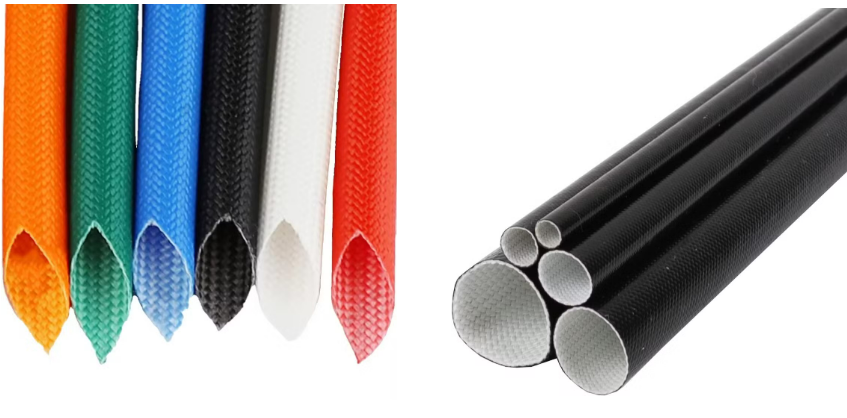
Fiberglass sleeving is generally produced through a series of processes involving glass fiber yarn preparation, braiding, coating, curing, and quality inspection.
The manufacturing process begins with continuous glass fiber filaments, commonly made from E-glass.
The filaments are processed into yarn suitable for braiding. The quality and consistency of the yarn influence the sleeve's tensile strength, flexibility, thermal stability, and electrical insulation performance.
Glass fiber yarn is fed into specialized braiding or weaving machines to create a flexible tubular structure.
The braiding density, yarn arrangement, and wall thickness determine the sleeve's flexibility, expandability, mechanical strength, and coverage.
Depending on the required application, the fiberglass sleeve may remain uncoated or receive an additional insulating coating.
Common coating materials include:
PVC (Polyvinyl Chloride)
Acrylic resin
Silicone rubber
Silicone resin
Polyurethane (PU)
Insulating varnish
The coating helps improve dielectric strength, abrasion resistance, moisture resistance, and other application-specific properties.
Coated sleeves pass through a controlled drying or curing process to ensure proper coating adhesion, uniformity, and stability.
Uncoated sleeves may undergo heat treatment to remove residual sizing agents and organic binders from the glass yarn.
The finished sleeves are cut into specified lengths or supplied in continuous rolls.
Quality inspections may include checks for inner diameter, wall thickness, coating uniformity, flexibility, temperature resistance, dielectric strength, and appearance.
Fiberglass sleeves are available in several types depending on their coating materials and intended applications.
The most common varieties include PVC-coated, acrylic-coated, silicone rubber-coated, silicone resin-coated, polyurethane-coated, and uncoated fiberglass sleeves.
PVC-coated fiberglass sleeve is manufactured by applying a polyvinyl chloride coating to a braided fiberglass base.
It offers good flexibility, electrical insulation, abrasion resistance, and cost efficiency, making it suitable for general-purpose electrical applications.
Key characteristics:
Good electrical insulation performance.
Flexible and easy to install.
Good abrasion and mechanical protection.
Suitable for general industrial environments.
More economical than many high-temperature alternatives.
Typical temperature rating: Around 130°C, depending on the coating formulation and product specification.
Common applications:
Household appliances
Electrical control panels
Lighting equipment
Small motors
General electrical wiring
Low-voltage electrical components
PVC-coated fiberglass sleeving is a practical choice for applications where moderate temperature resistance and economical electrical insulation are required.
Acrylic-coated fiberglass sleeve uses acrylic resin as the insulating coating material.
Compared with PVC-coated products, acrylic-coated sleeves generally offer better heat resistance and good compatibility with electrical insulating varnishes.
They also provide good abrasion resistance and mechanical protection, making them suitable for motor and transformer applications.
Key characteristics:
Good dielectric strength.
Better temperature resistance than standard PVC-coated grades.
Good cut-through and abrasion resistance.
Compatible with many insulating varnishes.
Suitable for electrical winding applications.
Typical temperature rating: Around 155°C for common Class F grades. Actual ratings depend on the formulation and complete insulation system.
Common applications:
Electric motor lead wires
Transformer connections
Generator wiring
Inductors and coils
Industrial electrical equipment
Lighting ballasts
Acrylic-coated fiberglass sleeve is particularly suitable for electrical equipment requiring a balance between thermal performance, mechanical protection, and cost.
Silicone rubber-coated fiberglass sleeve consists of a braided glass fiber base covered with a flexible silicone rubber layer.
It offers excellent flexibility, heat resistance, electrical insulation, and resistance to environmental aging.
Unlike some rigid resin coatings, silicone rubber remains flexible across a wide temperature range, making it suitable for wiring exposed to vibration, movement, and repeated thermal changes.
Key characteristics:
Excellent high-temperature resistance.
Good flexibility at low and high temperatures.
Good electrical insulation properties.
Good resistance to moisture, ozone, and aging.
Suitable for applications involving vibration and movement.
Typical temperature rating: Around 180–200°C for many standard grades. Specialized formulations may offer different ratings.
Common applications:
Electric vehicle wiring systems
Battery pack wiring protection
Motor and generator leads
Industrial heating equipment
Household appliances
Automotive electrical systems
High-temperature cable protection
Silicone rubber-coated fiberglass sleeving is an excellent option for applications requiring both thermal protection and long-term flexibility.
Silicone resin-coated fiberglass sleeve is manufactured by impregnating or coating braided glass fiber with silicone resin.
Compared with silicone rubber-coated sleeving, silicone resin products are generally more rigid and dimensionally stable, with good dielectric performance and thermal resistance.
The coating helps create a more uniform insulating layer and provides additional protection against moisture and environmental aging.
Key characteristics:
Good dielectric strength.
Excellent thermal stability.
Good dimensional stability.
Consistent coating structure.
Suitable for demanding electrical insulation applications.
Typical temperature rating: Commonly designed for Class H (180°C) insulation systems, depending on the product specification.
Common applications:
High-temperature motor leads
Transformer winding connections
Generator insulation
Industrial heating equipment
Electrical coils
High-voltage electrical components
Silicone resin-coated fiberglass sleeve is suitable for applications where electrical insulation stability and thermal performance are more important than repeated flexibility.
Polyurethane-coated fiberglass sleeve combines a braided glass fiber structure with a polyurethane protective coating.
The coating provides good abrasion resistance, mechanical protection, and flexibility, making it suitable for applications where the sleeve may experience friction or contact with surrounding components.
Key characteristics:
Good abrasion resistance.
Good mechanical protection.
Flexible construction.
Resistance to various oils and chemicals, depending on the formulation.
Suitable for industrial wiring protection.
Common applications:
Industrial machinery
Electrical equipment
Motor lead protection
Cable harnesses
Mechanical equipment wiring
General industrial insulation
The actual operating temperature and chemical resistance should be confirmed with the manufacturer's technical datasheet.
Uncoated fiberglass sleeve consists of braided glass fiber yarn without an additional insulating coating.
Its main advantage is excellent resistance to high temperatures because it does not contain an organic coating that may soften, degrade, or decompose under heat.
However, the open braided structure provides limited electrical insulation compared with coated fiberglass sleeves.
Key characteristics:
Excellent high-temperature resistance.
Non-combustible glass fiber base.
Good thermal and mechanical protection.
Flexible tubular structure.
Limited dielectric protection due to its open weave.
Common applications:
Furnace wiring
Heating element leads
Thermocouple protection
Industrial ovens
Glass manufacturing equipment
High-temperature cable protection
Uncoated fiberglass sleeve is mainly selected for thermal and mechanical protection rather than as the sole electrical insulation layer for live conductors.
Heat-treated fiberglass sleeve is manufactured by exposing uncoated glass fiber braid to a controlled high-temperature treatment.
This process removes residual sizing agents, binders, and other organic materials from the glass yarn.
The resulting sleeve produces less smoke and fewer fumes when first exposed to high temperatures.
Common applications include:
Industrial furnaces
Glass production equipment
Steel manufacturing facilities
High-temperature heating systems
Specialized industrial wiring
Heat-treated sleeves are particularly useful in environments where residual organic materials could interfere with high-temperature operations.
Different coating materials offer different levels of electrical insulation, heat resistance, flexibility, and mechanical protection.
The following table provides a general comparison of common fiberglass sleeving products.
| Sleeve Type | Typical Temperature Rating | Main Advantages | Common Applications |
|---|---|---|---|
| PVC coated | Around 130°C | Economical, flexible, good insulation | Appliances, control panels |
| Acrylic coated | Around 155°C | Heat resistance, abrasion resistance | Motors, transformers |
| Silicone rubber coated | Around 180–200°C | High flexibility, heat resistance | EV wiring, heaters, motors |
| Silicone resin coated | Around 180°C | Thermal stability, dielectric performance | Transformers, generators |
| PU coated | Grade dependent | Abrasion and mechanical protection | Industrial machinery |
| Uncoated fiberglass | Several hundred °C, grade dependent | Excellent heat resistance | Furnaces, heating elements |
| Heat-treated fiberglass | Several hundred °C, grade dependent | Clean glass surface, reduced fumes | Steel and glass industries |
Note: These are indicative values rather than universal product limits. Actual continuous operating temperatures, short-term exposure limits, dielectric ratings, and insulation classes must be verified using the manufacturer's technical datasheet.
Fiberglass sleeves provide several important benefits for electrical insulation and industrial protection.
Glass fiber maintains its structural properties at temperatures much higher than those tolerated by most conventional plastic materials.
When combined with suitable coatings, fiberglass sleeving can protect electrical wiring and components operating in demanding thermal environments.
Coated fiberglass sleeves provide dielectric protection between conductors and surrounding components.
Their electrical performance depends on coating material, wall thickness, manufacturing quality, and environmental conditions.
They are widely used in motor windings, transformer connections, generator leads, and electrical equipment.
The braided fiberglass structure provides resistance to abrasion, friction, and mechanical wear.
This helps protect cables and wires from damage during installation and operation.
Fiberglass sleeving is available in different diameters, wall thicknesses, and braid constructions.
Flexible coated versions can be installed over wires, cable bundles, and electrical connections, making them suitable for a wide range of equipment designs.
Depending on the coating, fiberglass sleeves can provide resistance to moisture, oils, chemicals, ozone, and environmental aging.
Silicone-coated products generally offer good moisture and weather resistance, while polyurethane and other coatings may provide additional abrasion or chemical protection.
The exact resistance depends on the coating formulation and exposure conditions.
Glass fiber itself is non-combustible, and many fiberglass sleeving products are designed to provide flame-resistant protection.
However, the coating may affect the overall flame performance of the finished sleeve.
For applications involving fire exposure or flame propagation requirements, always check the relevant product test reports and fire-performance certifications.
Fiberglass sleeving is used in many industries where electrical insulation, thermal protection, and mechanical durability are required.
Electric motors and generators produce heat during operation, particularly around winding connections and lead wires.
Fiberglass sleeves help protect these electrical connections from high temperatures, abrasion, and electrical contact.
Common applications include:
Motor winding lead protection
Stator and rotor connections
Generator wiring
Coil insulation
Internal electrical connections
Acrylic and silicone-coated fiberglass sleeves are commonly selected according to the motor's insulation class and operating conditions.
Transformers operate under electrical and thermal stress, requiring reliable insulation materials to prevent short circuits and electrical breakdown.
Fiberglass sleeves are used to protect lead wires, winding connections, and electrical terminals.
Common applications include:
Transformer lead insulation
Winding connection protection
Generator terminal wiring
Electrical distribution equipment
High-temperature electrical connections
Acrylic, silicone resin, and varnished fiberglass sleeves may be selected depending on the insulation system and impregnation process.
Modern vehicles contain extensive electrical wiring systems that operate under vibration, temperature fluctuations, and mechanical stress.
Fiberglass sleeving provides additional protection for wiring exposed to engine heat and demanding operating conditions.
Common applications include:
Engine compartment wiring
Electric motor leads
Battery system wiring
Charging system connections
Power electronics wiring
Automotive sensor cables
Silicone-coated fiberglass sleeves are particularly useful where high temperatures and flexibility are both required.
For high-voltage EV applications, the sleeve must be selected based on the complete electrical insulation design, including voltage, clearance, creepage, and environmental requirements.
Household appliances such as ovens, washing machines, air conditioners, and electric heaters contain wiring that may be exposed to heat, vibration, and mechanical contact.
Fiberglass sleeving helps protect internal wires and electrical connections.
Common applications include:
Oven heating element leads
Washing machine motor wiring
Air conditioner electrical connections
Microwave wiring
Electric iron wiring
Lighting equipment
PVC and acrylic-coated sleeves are commonly used for general applications, while silicone-coated sleeves are suitable for higher-temperature areas.
Industrial furnaces, ovens, boilers, and heating systems operate under high-temperature conditions.
Fiberglass sleeving is used to protect thermocouple leads, heating element wires, and electrical connections.
Uncoated and heat-treated fiberglass sleeves are particularly useful where high thermal exposure is the primary concern.
Aerospace and marine electrical systems require insulation materials that can withstand demanding environmental conditions.
Depending on the qualified design, fiberglass sleeving may be used for:
Equipment wiring
Motor and generator connections
Electrical harness protection
High-temperature cable routing
Specialized machinery connections
Material selection must comply with the relevant industry and project-specific qualification requirements.
Selecting the correct fiberglass sleeve requires evaluating the operating environment, electrical requirements, mechanical conditions, and installation method.
Temperature is one of the most important factors when selecting fiberglass sleeving.
Consider both the continuous operating temperature and any temporary temperature peaks.
General selection guidance:
Around 130°C: PVC-coated fiberglass sleeve.
Around 155°C: Acrylic-coated fiberglass sleeve.
Around 180–200°C: Silicone rubber or silicone resin-coated fiberglass sleeve.
Several hundred degrees Celsius: Specialized uncoated or heat-treated fiberglass sleeve, subject to the base material's rating and application requirements.
Do not select a sleeve based only on the maximum temperature of the glass fiber. The coating often determines the finished product's continuous operating limit.
For live electrical conductors, the sleeve must provide sufficient dielectric strength and withstand the operating voltage.
Consider:
Rated voltage
Dielectric breakdown voltage
Wall thickness
Insulation class
Electrical aging performance
Applicable safety standards
Uncoated fiberglass sleeves should not automatically be considered suitable for primary electrical insulation because their open braided structure may provide insufficient dielectric protection.
Consider whether the sleeve will be exposed to:
Repeated bending
Vibration
Abrasion
Sharp edges
Compression
Installation friction
Silicone rubber-coated sleeves are suitable for applications requiring flexibility, while acrylic and polyurethane coatings may be preferable where additional cut-through or abrasion resistance is needed.
The sleeve may be exposed to moisture, oil, cleaning agents, solvents, ozone, or other chemicals.
Choose a coating compatible with the actual operating environment rather than relying only on general material descriptions.
For example, silicone rubber generally offers good moisture and ozone resistance, while the chemical resistance of acrylic, PVC, and polyurethane varies with formulation.
Fiberglass sleeves are available in various inner diameters and wall thicknesses.
Before ordering, measure the outside diameter of the wire or cable bundle.
Consider the following factors:
Cable bundle diameter
Sleeve inner diameter
Wall thickness
Installation clearance
Bending radius
Required coverage length
Braided fiberglass sleeves may offer some radial expansion, depending on braid construction, but they are not equivalent to heat-shrink tubing.
Choosing an appropriate size helps prevent installation difficulties and excessive movement during operation.
For industrial and electrical applications, check the applicable material and product standards.
Depending on the application, relevant requirements may include UL 1441 for electrical insulating sleeving and applicable flame, dielectric, thermal aging, and environmental testing standards.
Always confirm that the specific product grade and finished construction meet the customer's certification requirements.
Fiberglass sleeving and heat shrink tubing are both used for electrical wire protection, but they have different structures and performance characteristics.
| Comparison | Fiberglass Sleeve | Heat Shrink Tubing |
|---|---|---|
| Material | Braided glass fiber with optional coating | Polymer materials |
| Heat resistance | High, depending on coating | Depends on polymer type |
| Installation | Slid over wires or cable bundles | Heated to shrink around components |
| Flexibility | Varies by coating and braid | Varies by polymer |
| Mechanical protection | Good abrasion and thermal protection | Good insulation and environmental protection |
| Diameter adjustment | Limited braid expansion | Shrinks to fit |
| Main applications | Motors, transformers, heaters | Wire joints, terminals, cable protection |
Fiberglass sleeving is generally preferred for high-temperature environments and applications requiring thermal and mechanical protection.
Heat shrink tubing is more suitable when a tight-fitting protective layer, moisture sealing, or insulation around wire connections is required.
The two products may also be used together in certain electrical assemblies.
Proper installation helps maintain the protective performance and service life of fiberglass sleeving.
1. Check the sleeve size before installation.
Ensure the inner diameter is suitable for the wire or cable bundle.
2. Avoid excessive stretching or compression.
Incorrect installation can damage the braid or coating and reduce protection.
3. Protect cut edges.
Cut fiberglass braids may fray. Use appropriate cutting tools and approved end-sealing methods where required.
4. Avoid sharp bending.
Maintain the recommended bending radius to prevent coating cracks and mechanical damage.
5. Inspect regularly.
Check for cracks, discoloration, abrasion, coating deterioration, and exposed glass fibers.
6. Replace damaged sleeves.
Sleeves showing significant deterioration should be replaced to maintain electrical and thermal protection.
Inspection intervals should be based on the operating environment, equipment maintenance schedule, and manufacturer's recommendations.