Fiberglass vs. Silicone-coated Fire Blanket: How to Choose
Fire blankets are lifesaving essentials, quickly smothering small fires during household emergencies before flames spread and become dangerous.
Choose silicone-coated fire blankets when flexibility, grease resistance, and durability matter. They handle higher, consistent heat, resist sparks and abrasion, and are ideal for kitchens, workshops, welding, and industrial use.
Choose standard fiberglass fire blankets for cost-effective, general fire suppression in low-risk areas like homes. They’re effective for small fires but stiffer, less durable, and have lower heat resistance.
Bottom line:
- High heat, grease, or frequent use → Silicone-coated
- Occasional, low-risk home use → Fiberglass
- Always ensure compliance with EN 1869:2019 or equivalent standards.
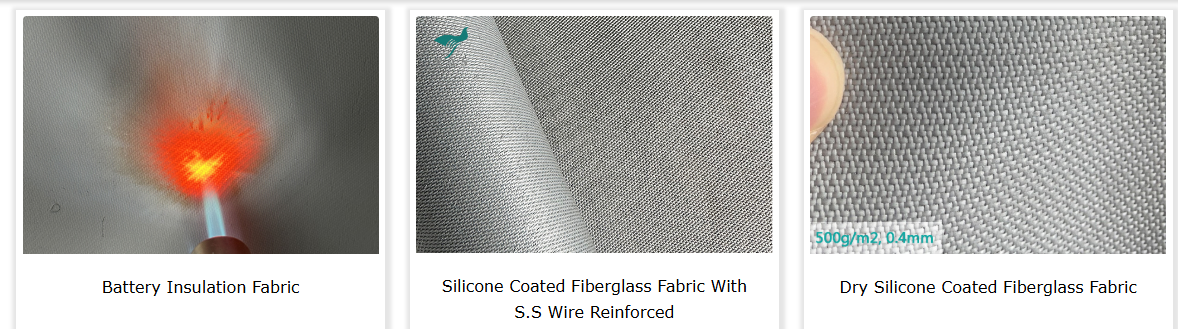
1. What Is a Silicone-Coated Fire Blanket?
A silicone-coated fire blanket is a flexible, high-temperature fire-safety barrier designed to quickly smother small, contained fires while protecting people and surrounding surfaces from heat, sparks, and molten debris. It is widely used in kitchens, laboratories, workshops, and hot-work areas because it is easy to deploy and creates minimal cleanup compared with traditional fire extinguishers. With cooking remaining one of the leading causes of residential fires worldwide, having the right fire-suppression tool readily available is essential.
As a vertically integrated supplier across FRP, Silicone coated fiberglass fabric, and Yarn, EAS Industries supports distributors, contractors, and OEM/private-label customers with compliant fire-blanket solutions—covering sizing, packaging, documentation, and quality control—without pressure-based selling.
Uses and Advantages of Silicone-Coated Fire Blankets
Silicone-coated fire blankets are highly effective for controlling small emergency fires. They are made from woven fiberglass fabric coated with a layer of heat-resistant silicone, which significantly enhances performance compared to standard fiberglass blankets.
Key benefits include:
- High heat resistance: Do not melt or degrade under extreme temperatures
- Enhanced durability: Silicone coating improves strength and resistance to wear, moisture, and weathering
- Superior flexibility: Conforms easily to uneven or irregular surfaces for better fire coverage
- Low maintenance: Easier to clean and handle than uncoated fiberglass blankets
- Long service life: Maintains performance over repeated use
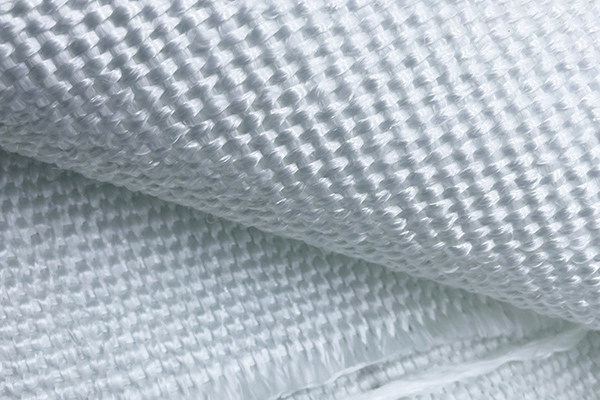
2. What Is a Fiberglass Fire Blanket?
A fiberglass fire blanket is a non-flammable safety device made from woven glass fibers, designed to extinguish small fires by cutting off their oxygen supply. Durable, reusable, and non-expiring, these blankets can withstand temperatures up to 1,076°F (580°C) or higher, making them suitable for kitchen grease fires, camping incidents, and vehicle emergencies.
How It Works:
When placed over a fire, the blanket smothers the flames by isolating them from oxygen. It is most effective on liquid, grease, and other small, contained fires.
Material & Durability:
Manufactured from woven fiberglass fabric—sometimes enhanced with a silicone coating—these blankets are lightweight, heat-resistant, and maintenance-free. They provide a clean, mess-free alternative to traditional fire extinguishers.
Safety & Use:
Designed for rapid deployment, the blanket is released by pulling safety tabs and placing it carefully over the fire. In some cases, exposed fiberglass fibers may cause mild skin irritation, so direct handling should be minimized.
Applications:
A fiberglass fire blanket provides reliable protection against small fires, offering heat resistance and safety, though it is less flexible and may degrade over time compared to silicone options. Ideal for homes, kitchens, fireplaces, garages, barbecues, offices, and general fire-safety kits.
Overall, fiberglass fire blankets are a critical, easy-to-use fire-safety solution that helps prevent fire spread without secondary pollution or residue.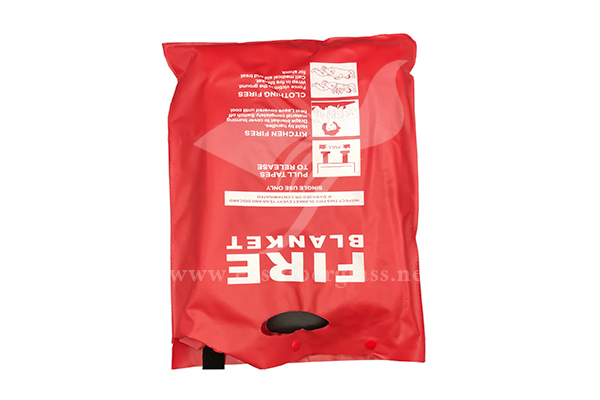
3. The Difference Between Fiberglass Fire Blankets and Silicone-Coated Fire Blankets
Both fiberglass fire blankets and silicone-coated fiberglass fire blankets are safe and effective for fire suppression, including home use. However, they differ in material structure, durability, handling comfort, and ideal applications. Below is a clear comparison of the two most commonly used types.
Material & Performance Comparison
Fiberglass Fire Blankets
- Material Composition
Fiberglass fire blankets are made entirely from woven fiberglass yarn, without any additional silicone or PTFE coating. The fabric retains the inherent strength and stiffness of fiberglass.
- Durability
Naturally strong and tear-resistant, fiberglass blankets can withstand rough handling during emergencies and long-term storage.
- Flexibility
While robust, uncoated fiberglass blankets are relatively stiff. They can be folded and wrapped around objects but are less flexible than coated alternatives.
- Heat Resistance
Fiberglass offers excellent heat and flame resistance, making these blankets reliable in high-temperature environments and effective at preventing fire spread.
- Limitations
Handling may release fine glass fibers, which can cause mild skin or respiratory irritation without protective gloves.
Silicone-Coated Fire Blankets
- Material Composition
Silicone-coated fire blankets use the same fiberglass base fabric but add a layer of heat-resistant silicone. This coating significantly improves handling safety and performance.
- Enhanced Strength & Protection
The silicone layer increases resistance to tearing, abrasion, moisture, oil, and chemicals. It also minimizes fiberglass fiber shedding.
- Flexibility & Insulation
Silicone coating makes the blanket softer and more flexible, allowing it to conform easily to uneven surfaces. Together, fiberglass and silicone provide excellent thermal insulation and flame suppression.
- Long-Term Durability
Known for extended service life, silicone-coated blankets maintain integrity over time. The coating protects the underlying fiberglass from heat, moisture, and chemical degradation.
4. Fiberglass vs Silicone-Coated Fire Blankets
| Feature |
Fiberglass Fire Blankets |
Silicone-Coated Fire Blankets |
| Heat Resistance |
Up to 1,000°F (≈540°C) or higher |
Up to 1,200°F (≈650°C) or higher |
| Cost |
More affordable; ideal for basic fire-safety kits |
Slightly higher cost, justified by performance |
| Durability |
Strong, tear-resistant, compact for storage |
Enhanced abrasion and tear resistance |
| Flexibility & Handling |
Stiffer; may release fine fiberglass fibers |
Softer, more flexible; reduced fiber shedding |
| Safety Comfort |
Possible mild skin irritation |
Improved handling safety and comfort |
| Environmental Resistance |
Limited moisture and chemical resistance |
Water-, oil-, and chemical-resistant |
| Best Applications |
Homes, garages, workplaces, trained-user environments |
Kitchens, outdoor use, industrial and high-risk settings |
5. Choosing the Right Fire Blanket for Your Needs
Selecting between fiberglass and silicone-coated fire blankets depends on your environment and safety priorities:
- Home Kitchens:
Silicone-coated fire blankets are the safer, more user-friendly option. They resist oil and grease, are easier to handle, and are gentler on skin—ideal when gloves may not be available.
- Workshops and Garages:
Fiberglass fire blankets offer reliable protection at a lower cost. In DIY or workshop settings, users typically have protective gloves or tools, reducing the risk of skin irritation.
- Industrial & Commercial Use:
High-risk environments such as factories, welding areas, and chemical labs benefit most from silicone-coated fire blankets. Their higher heat tolerance, chemical resistance, and reduced fiberglass shedding help protect both people and sensitive equipment.
6.Why Are Silicone Fire Blankets Better Than Fiberglass?
Silicone-coated fire blankets often outperform standard fiberglass blankets due to their superior durability, flexibility, and user safety.
- More Durable: Silicone-coated fiberglass resists wear, tearing, and degradation, providing longer service life than uncoated fiberglass.
- More Flexible: The silicone layer makes the blanket softer and easier to wrap around people, equipment, or uneven surfaces for better fire coverage.
- Higher Heat Resistance: Silicone enhances thermal insulation and withstands intense heat without melting—ideal for kitchen grease fires and industrial environments.
- Easier to Clean: The smooth, non-porous surface repels dirt, oil, and grease, allowing quick cleaning and better hygiene.
- Non-Irritating: Silicone reduces fiberglass shedding, making the blanket safer and more comfortable to handle, even without gloves.
Conclusion
Safety comes first, and both silicone-coated and fiberglass fire blankets serve important but different purposes. Silicone-coated blankets offer superior heat resistance, durability, and handling comfort, making them suitable for a wide range of environments. Fiberglass blankets remain a reliable, cost-effective option for high-temperature fire suppression. The right choice depends on where and how the blanket will be used. With proper storage, regular inspection, and correct handling, understanding their distinct advantages ensures you’re prepared for fire emergencies and have the right protection on hand.
7. Frequently Asked Questions
1) Can one fire blanket be used for both kitchens and welding?
Sometimes. Kitchen blankets usually comply with EN 1869, while welding or hot-work uses often require FM 4950 ratings. Choose the stricter spec or use two dedicated blankets.
2) How many times can a fire blanket be reused?
It may be reused if inspections show no damage or contamination. Retire it after major heat exposure or contact with oils or chemicals.
3) What size fire blanket is best for a small restaurant?
A 1.2 × 1.8 m blanket offers good coverage for common kitchen hazards and is easy for staff to handle.
4) How should contaminated fire blankets be disposed of?
Follow local regulations for contaminated textiles. Treat oil- or chemical-exposed blankets as hazardous waste when required.
5) Do we still need fire extinguishers if we have fire blankets?
Yes. Fire blankets handle specific small fires, while extinguishers, alarms, and evacuation plans are essential for full fire protection.
6) What type of fire blanket is best?
It depends on the environment. Silicone-coated blankets suit kitchens and homes; fiberglass blankets are durable and cost-effective for industrial use.
7) Are there quality differences in fire blankets?
Yes. Quality varies by material, construction, and certification. Always choose products that meet recognized safety standards.
8) Is fiberglass or silicone better?
Neither is universally better. Fiberglass is economical and heat-resistant; silicone-coated blankets offer better handling, higher temperature tolerance, and greater user comfort.
EAS Fiberglass Co., Ltd is a professional fiberglass products supplier and provides comprehensive and effective material industrial solutions covering the market of high-performance FRP, highly effective temperature insulation, and highly convenient construction. Nowadays, EAS owns various product lines of fiberglass yarn forming, woven fabrics, fabric coating/lamination, FRP, etc. The complete product lines enable EAS to master the quality control and products market competitive. Taking this advantage involves us in many projects and enhance brand promotion. Certified ISO9001-2008 equips EAS staff and management with a more professional operation. Certification of test reports for products is made by third-party laboratories SGS, TUV, DNV, etc.


